Emergency Water Heater Leaks: 5 Immediate Steps to Prevent Basement Water Damage
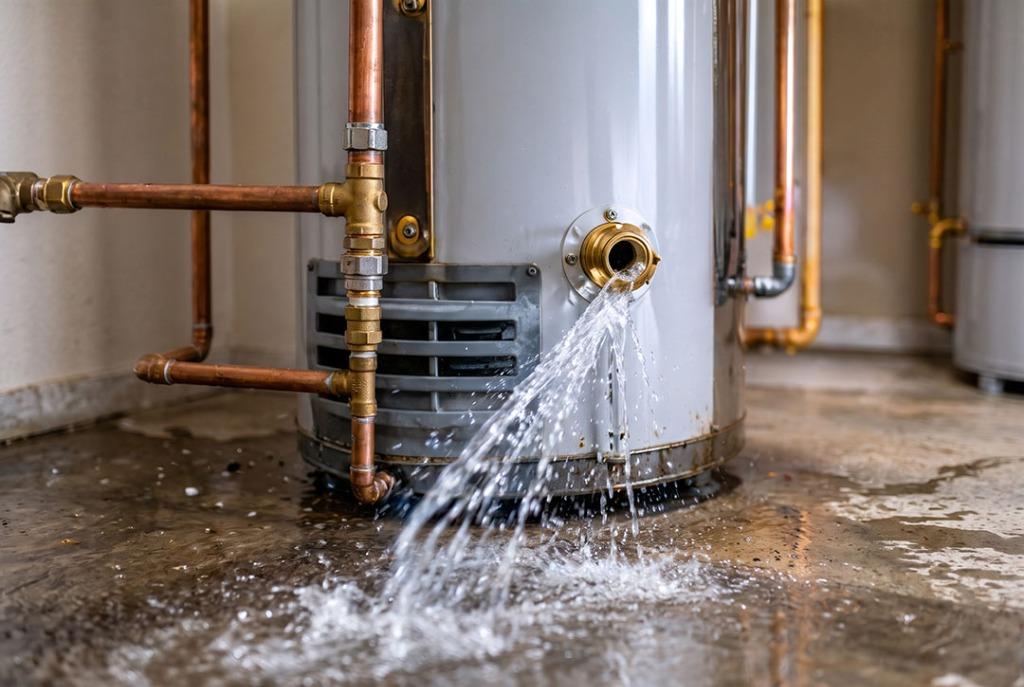
Few household emergencies cause as much immediate panic as discovering water pouring from your water heater into a finished basement. In the Denver metro area, where finished basements frequently serve as home offices, guest suites, and children's playrooms, a leaking water heater can cause $10,000 to $30,000 in drywall, carpet, and structural damage in a matter of hours.
When a water heater tank ruptures, municipal water pressure (typically 50 to 75 PSI) continues pushing hundreds of gallons of water into the tank and out across your floor until someone manually intervenes.
If your water heater is actively leaking right now, **take these 5 steps immediately**:
Step 1: Shut Off the Cold Water Supply Valve Immediately
The most urgent priority is cutting off the pressurized water feeding the leak.
- Locate the cold water pipe connected to the **top right** of your water heater.
- Follow the pipe up to find the shutoff valve:
- - **Brass Ball Valve (Handle)**: Rotate the lever 90 degrees so it is perpendicular (crosswise) to the pipe.
- - **Gate Valve (Round Wheel)**: Turn the round wheel clockwise until it stops tight.
- If the valve above the water heater is corroded or seized, go immediately to your **main household water shutoff valve** (usually located in the basement near the water meter or in the crawlspace) and turn it off completely.
Step 2: Turn Off the Power or Gas Fuel Supply
A water heater firing without water will overheat, melting internal components and creating severe fire or explosion hazards.
For Gas Water Heaters - Locate the gas control valve on the front bottom of the water heater tank. - Turn the prominent dial from "ON" to **"OFF"** (or to "PILOT" if you are waiting on a quick diagnostic visit). - If you smell natural gas or rotten eggs, leave the house immediately and call your utility from outside.
For Electric Water Heaters - Go to your main electrical circuit breaker panel. - Locate the double-pole 240-volt breaker labeled "Water Heater" (typically 30 amps). - Switch the breaker firmly to the **"OFF"** position. Never touch the breaker if standing in pooled water.
Step 3: Relieve Water Pressure by Opening a Hot Water Tap
Once the water supply is shut off, there is still pressurized water trapped inside your household plumbing pipes that will continue siphoning down into the water heater.
Go to an upstairs bathroom sink or tub and turn the hot water faucet on all the way. Leaving this faucet open breaks the vacuum seal, stopping siphoning and allowing the system to depressurize safely.
Step 4: Begin Draining the Tank (If Safe)
If you have a standard garden hose available and access to a nearby basement floor drain or sump pit:
- Attach the garden hose to the threaded brass or plastic drain valve at the very base of the water heater tank.
- Run the other end of the hose to a floor drain, sump pit, or out a basement egress window.
- Use a flathead screwdriver or pliers to open the drain valve counterclockwise.
- Open the lever on the Temperature & Pressure (T&P) safety valve at the top of the tank to introduce air, allowing water to drain quickly.
Step 5: Call for Emergency Water Heater Dispatch: (456) 789-0123
With the immediate flooding stabilized, call our emergency dispatch team at **(456) 789-0123**. We match you with an on-call, licensed Colorado plumber who services your neighborhood.
What Callers Should Have Ready When Calling - **Tank Brand & Model**: (e.g. Bradford White, Rheem, A.O. Smith). - **Tank Size**: Look at the capacity line on the label (typically 40, 50, or 75 gallons). - **Leak Source**: Top fittings, T&P relief valve, or leaking from the bottom seams. - **Physical Access**: Confirm clear stairs and paths so technicians can safely maneuver heavy replacement equipment into your home.
Leaking Water Heater Action Matrix
| Leak Origin | Can It Be Repaired? | Immediate Action Required |
|---|---|---|
| Top Flex Pipe / Dielectric Union | YES – Replace copper or stainless flex lines | Shut off water; plumber replaces fittings |
| T&P Safety Relief Valve | YES – Replace valve & test expansion tank | Relieve pressure; replace safety valve |
| Bottom Drain Valve | YES – Replace with full-port brass valve | Drain water; thread in new brass valve |
| Electric Element Gasket | YES – Drain tank & replace rubber gasket | Turn off breaker; replace gasket & element |
| Tank Bottom / Seams / Body | NO – Internal tank steel has corroded through | Shut off water & fuel; schedule [Water Heater Replacement](/water-heater-replacement-denver/) |
Insurance Claim Documentation: How to Protect Your Reimbursement
When a catastrophic water heater rupture causes thousands in basement drywall, subfloor, and carpet damage, documenting the incident properly is critical for your homeowner insurance claim:
- **Take Extensive Photos and Videos First**: Before cleaning up or removing any standing water, capture wide-angle and close-up photos of the water line, soaked baseboards, damaged furniture, and the leaking water heater tank showing the serial number and manufacture date.
- **Preserve the Failed Appliance**: Do not allow anyone to haul the failed water heater to the scrapyard until your insurance adjuster has inspected it or granted permission to dispose of it. Adjusters frequently inspect the failure point (e.g., verifying whether it was sudden seam rupture vs. gradual long-term neglect).
- **Mitigate Immediate Damage**: Insurance policies require homeowners to take reasonable steps to prevent secondary mold growth. Use wet/dry shop vacuums, extract water, and run heavy-duty dehumidifiers and fans immediately.
- **Keep Itemized Receipts**: Save all invoices from emergency plumbers, restoration extraction crews, and temporary accommodations if your home is rendered uninhabitable.
The Role of Sump Pumps and French Drains During a Burst Tank
In Denver basements equipped with perimeter French drains and sump pump basins, routing your water heater's aluminum drain pan directly to the sump pit provides emergency relief during an unexpected tank rupture. A commercial 1/3-horsepower or 1/2-horsepower sump pump can discharge 2,000 to 3,000 gallons per hour out to your yard, effortlessly keeping up with a ruptured 50-gallon tank and preventing rising water from reaching finished rooms.
How to Protect Your Basement From Future Water Heater Floods
If you have experienced a water heater leak once, taking these preventative measures on your new installation ensures you never face another basement flood:
- **Heavy-Duty Aluminum Drain Pan**: Placed under the new water heater and plumbed directly to a floor drain via a dedicated 3/4-inch PVC drain pipe.
- **Automatic Water Shutoff Sensor**: A smart leak detector (like Flo by Moen or Taco LeakBreaker) sits in the drain pan. The second it detects 1/16th-inch of water, it sounds an audible alarm and actuates an electric motorized ball valve, cutting off water in 3 seconds.
- **Thermal Expansion Tank**: Absorbs thermal pressure spikes that blow out safety valves and stress tank seams.
- **Professional Maintenance**: Schedule a yearly [Water Heater Maintenance](/water-heater-maintenance-denver/) visit to monitor anode rod depletion and tank wall thickness.
For immediate help anywhere across the Denver metro area, call **(456) 789-0123** now.
On-Site Field Testing & Diagnostic Standards
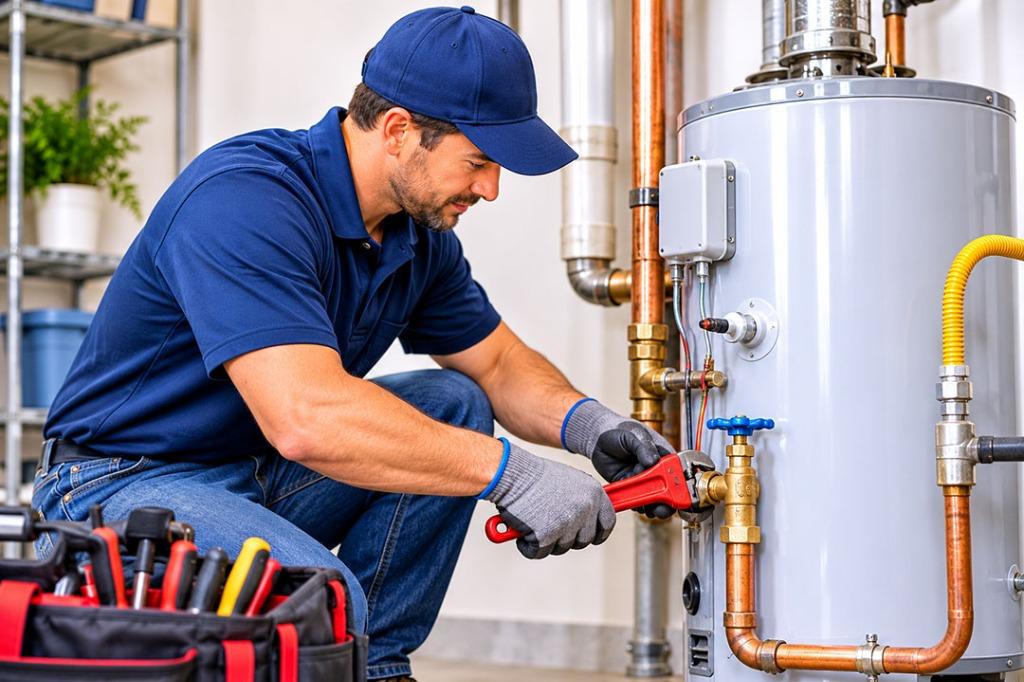
Denver plumbers verify water pressure, high-altitude gas combustion ratios, and electrical continuity before recommending part replacements. If you suspect your water heater is failing, call for an immediate on-site inspection.